

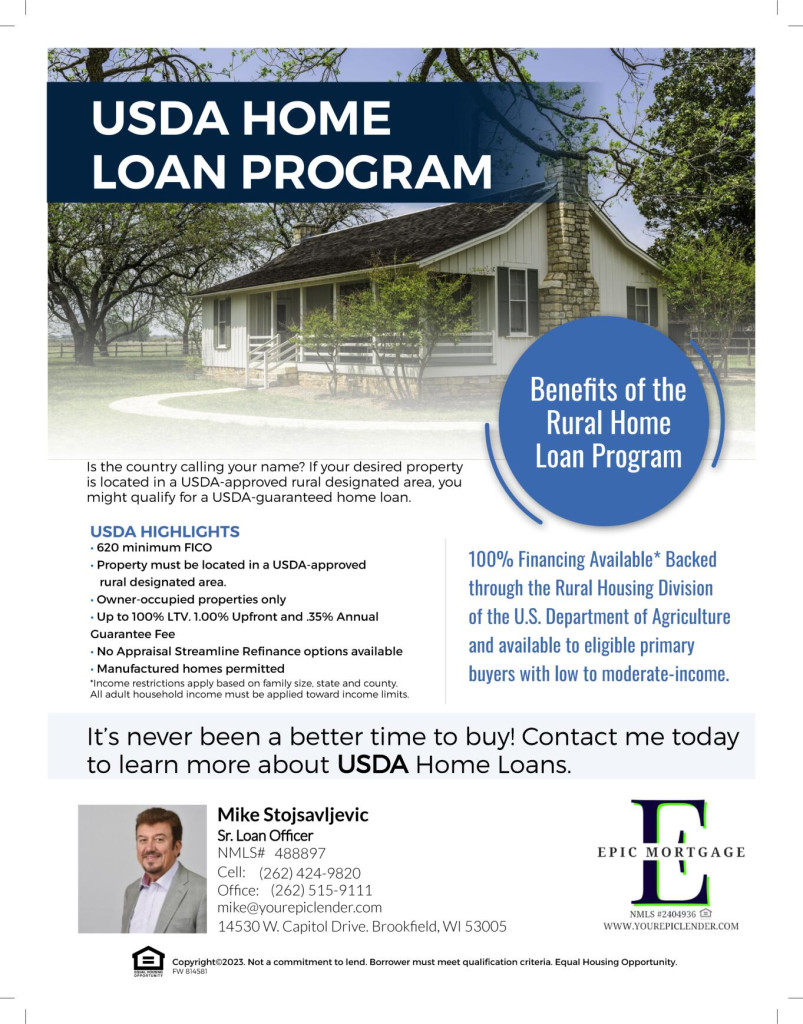
USDA Loans also known as a Rural Home Loan is an affordable option for eligible home buyers offering lower rates and lower down payment requirements. Working with a knowledgeable mortgage broker like Mike Stoy can be beneficial in navigating the USDA Home Loan process and ensuring that you meet all the requirements.
When seeking assistance from a specific lender or loan officer, it's essential to gather information about their experience with USDA Home Loans and their track record of helping borrowers in similar situations. Additionally, you may want to inquire about their knowledge of the specific eligibility requirements, loan options, interest rates, and any fees or costs associated with the loan.
Remember, USDA Home Loans have specific eligibility criteria based on income limits, property location, and other factors. It's important to work closely with a qualified professional who can guide you through the application process and provide personalized advice based on your financial situation and homeownership goals.
Here are some key features and details of USDA Home Loans:
- Eligibility: USDA Home Loans are primarily intended for borrowers looking to buy homes in rural areas. The USDA defines rural areas as locations with populations of less than 35,000. However, there are also some suburban areas that may qualify. Eligibility is determined by the property's location and the borrower's income and creditworthiness.
- Income requirements: USDA Home Loans aim to assist individuals or families with low-to-moderate income levels. The specific income limits vary based on the area and the size of the household. Generally, the borrower's income should not exceed 115% of the median income for the area.
- No down payment: One of the significant advantages of USDA Home Loans is that they offer 100% financing, meaning no down payment is required. This feature makes it an attractive option for borrowers who may not have substantial savings for a down payment.
- Low-interest rates: USDA Home Loans typically offer competitive interest rates compared to conventional mortgage loans. These rates may be lower than those available through private lenders, making homeownership more affordable for eligible borrowers.
- Mortgage Insurance: USDA Home Loans require borrowers to pay mortgage insurance premiums (MIP). There are both an upfront fee and an annual fee for the insurance. However, the upfront fee can be financed into the loan amount.
- Property requirements: The property being financed with a USDA Home Loan must meet certain requirements. It should be located in an eligible rural area, meet the USDA's standards for decent, safe, and sanitary housing, and be the borrower's primary residence.
- Loan types: USDA Home Loans are available in two types: Direct and Guaranteed. Direct loans are offered directly by the USDA to low and very-low-income borrowers. Guaranteed loans are provided by approved private lenders, and the USDA guarantees a portion of the loan to encourage lenders to offer favorable terms.
It's important to note that while USDA Home Loans are designed to support rural homeownership, not all rural areas are eligible. To determine if a specific property qualifies for a USDA Home Loan, you can use the USDA's eligibility map or consult with a USDA-approved lender.
Overall, USDA Home Loans provide an opportunity for individuals and families with limited income to achieve homeownership in rural areas. If you are interested in pursuing a USDA Home Loan, it's recommended to reach out to a USDA-approved lender who can guide you through the application process and provide more detailed information based on your specific circumstances.
Advantages of USDA Loans:
- 100% Financing ($0 down payment)
- Must be in a federally designated Rural Area
- No Monthly Mortgage Insurance (PMI)
- FICO Scores down to 580
- Lower Interest Rates than Conventional loans
- No Pre-payment Penalty
- Low Closing Costs
- Less Than Perfect Credit Is Welcome


